
Disappointment
And some announcements for the new year

I won’t name names, but I’m deeply disappointed how few of my liberal friends (moderates—not leftists or wokies) resisted the absurd charge of a “genocide” in Gaza. Some even ended up endorsing it, perhaps under social pressure or misled by once-respectable NGOs and media propaganda.
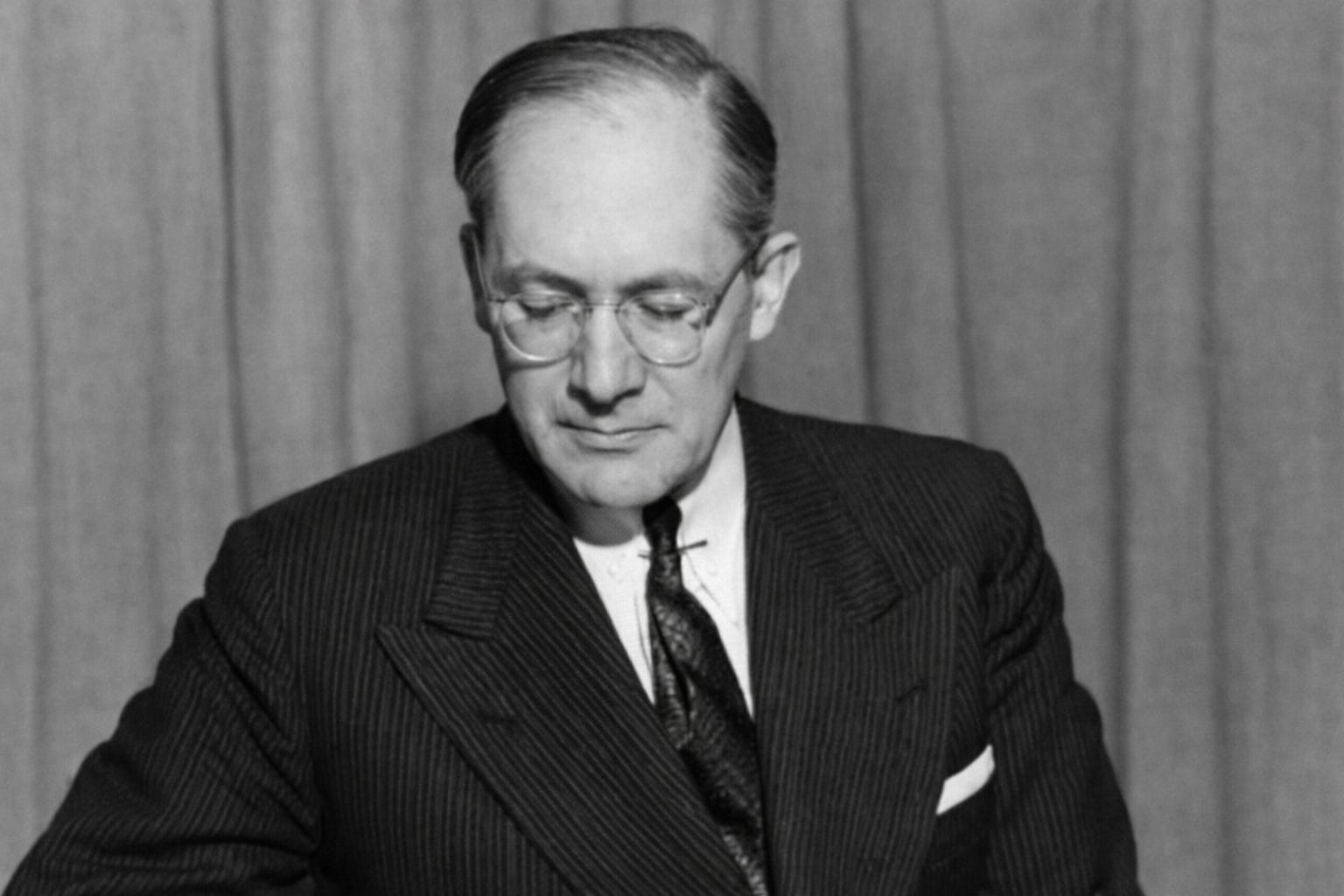
This includes academics who should have known better—people familiar with the legal definition of genocide, who understand why the Polish-Jewish scholar Raphael Lemkin coined a term for this “crime of crimes” in the first place. Some are even scholars of the Holocaust and other genocides in human history.
In my view, once the dust has settled, the “Gaza genocide” will be recognized as the most egregious case in recent years of what Joseph Heath calls “highbrow misinformation”—worse even than all the nonsense we were subjected to during the COVID era. And it was dangerous misinformation, akin to a modern-day blood libel, stoking antisemitism and anti-Zionism across the globe, and endangering Jewish and Israeli lives everywhere.
This is also why I stopped donating to NGOs such as Doctors Without Borders and Amnesty International, despite the invaluable and admirable work they still do. The level of ideological capture has simply become too extreme. All of these organizations irresponsibly parroted the “genocide” libel, relying on the same bogus arguments, the same willful ignorance about urban warfare and Hamas’s cynical tactics, and the same regurgitated lists of distorted or fabricated “quotes” from Israeli leaders. Doctors Without Borders even lied about Hamas’s systematic presence and extensive tunnel network beneath the al-Shifa hospital, where the NGO has operated for decades, effectively giving cover to the terrorist group. I now donate exclusively to effective charities that have a proven track record of solving real-life misery without engaging in ideological grandstanding.


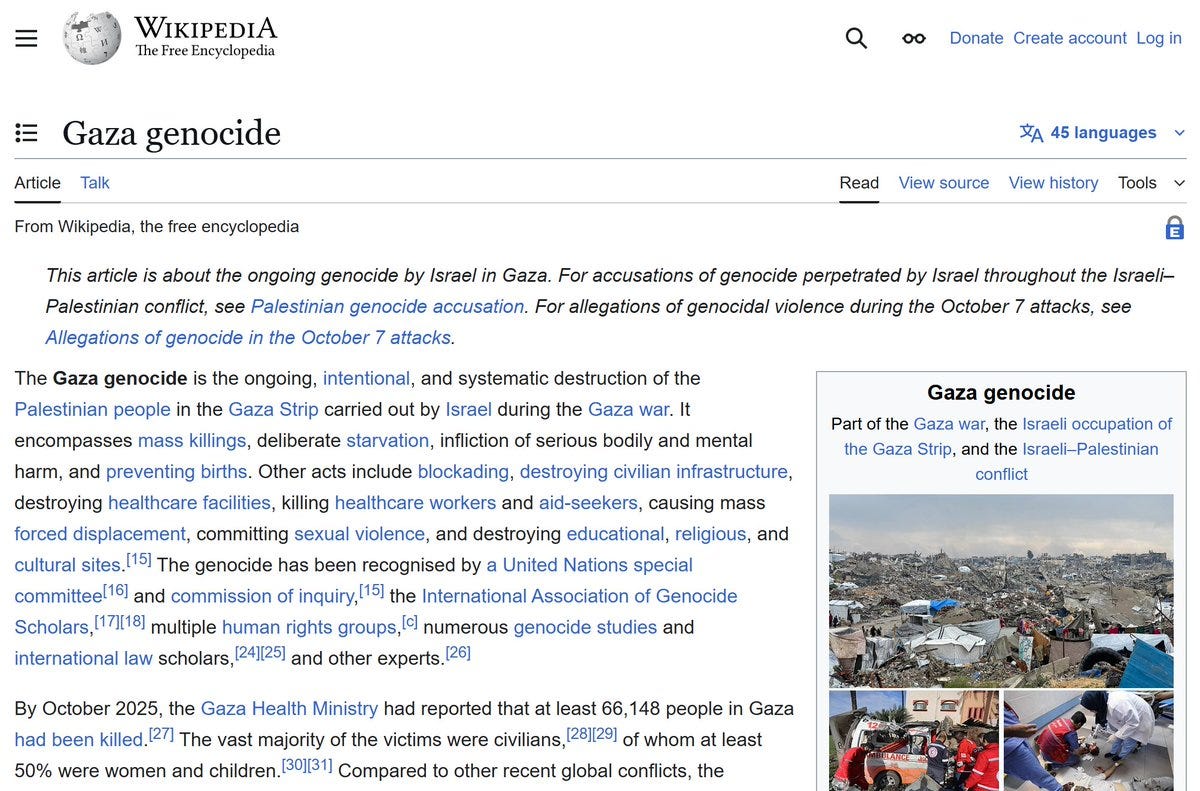
The same applies to Wikipedia, another noble project I once donated to. Given the website’s leftward drift over the past years, it’s no surprise they have now “taken the oath” and officially endorsed the Gaza genocide, defined as the “ongoing, intentional and systematic destruction of the Palestinian people” by Israel (in reality, the population has ballooned for decades). Even Wikipedia's founder Jimmy Wales has blasted the article as “one of the worst Wikipedia entries I've seen in a very long time” and a “particularly egregious example” of ideological bias.
None of this means that Israel should not be criticized, including for plausible war crimes committed by the IDF in Gaza. I do so myself in my Quillette piece. But the charge of genocide (i.e., the deliberate extermination of a whole people) remains as absurd and obscene as when it was first leveled—mere days after the October 7 massacre, which in itself reveals how deeply unserious this accusation was.
I have already lost too many friends over this horrible conflict, so I promise I won’t hold it against anyone personally. I think my friends are woefully wrong; they think the same of me, and are probably also very disappointed. So be it. But I can’t hide my own disappointment and frustration.
Anyway, I’ve now removed the paywall to my essay on the genocide calumny:
See also my interview in the French magazine Atlantico, in which I explain why, for large swaths of the Left, endorsing the “genocide” in Gaza has become a rallying point and a loyalty test, akin to the myth of the stolen 2020 election for the Trumpian Right. You can read the full text (in French) here for free.
Some announcements
Some of you may have had a déjà vu while reading the above, as I posted an earlier version as a Substack note two weeks ago (notes don’t land in your inboxes). Since it clearly resonated with people—garnering over 200 hearts—I decided to share it here as well. As a reminder: if you want new posts in your inbox, be sure to click Subscribe, not just Follow.
In the meantime, I’ve just finished another essay on eco-misanthropy for Quillette, with the working title “How the West Learned to Hate Humanity: From Modernity to Misanthropy.” It is inspired by Cixin Liu’s sci-fi trilogy Remembrance of Earth’s Past, which is absolutely mind-blowing and highly recommended. My essay will appear at Quillette first and be reposted here about a week later.

I’m also working on a new piece about the spiral of silence in academia on Israel and Gaza, drawing on dozens of pages of anonymous testimonies I collected from academic colleagues who privately agree with me—or at least hold heterodox views on the topic—but are afraid to speak out for fear of professional and social consequences. That, in a nutshell, is the current state of academic “freedom.”

As the new year approaches, my temporary contract with Ghent University draws to a close, meaning that in 2026 I’ll be fully independent and able to focus more on non-academic writing and speaking. I also have another exciting project in the pipeline: I’m proud to serve on the Advisory Board of the brand new 451 Institute, alongside luminaries such as psychologist Steven Pinker and sociologist Nathalie Heinich.

The aim of The 451 Institute is to nurture disagreement and protect critical institutions against ideological capture—both from top-down government control and from bottom-up activist pressure. And yes, that includes selective and one-sided boycotts on ideological grounds (looking at you, Ghent University).
You can think of it as a European counterpart to the Heterodox Academy, except that our scope extends beyond academia. We believe that other forms of critical infrastructure in our societies—hospitals, airports, major banks—must also become resilient to ideological capture. The new institute was founded by my friend Yohan Benizri. More to come!
In the meantime, I wish you all a splendid new year. If you want to support my work, consider becoming a paid subscriber or fueling me with some caffeine (see below), to get the creative juices flowing. And if that’s not in the budget, simply liking or sharing a post works wonders too. ☕️
Couldn't agree more with you, Maarten. My apologies for the long rant, but that false accusation of genocide is so idiotic that I need to get this off my chest in a therapeutic way, otherwise I’ll go mad.
The Genocide Convention defines genocide as “acts committed with intent to destroy, in whole or in part, a national, ethnical, racial or religious group, as such.” The key words are “intent to destroy … as such.” The motive for the large scale killing of members of a particular population group must be the fact that they belong to that particular population group. Or, in plain English: there's no military logic behind the killings, the motive for the killing is pure ethnic hatred.
In Sudan, the RSF are killing 150,000 Masalit/Fur/Zaghawa because they belong to those ethnic groups. Rwanda 1994: 800,000 Tutsis were slaughtered by Hutu militias because they were Tutsis. Srebrenica 1995: an entire village of Bosnian Muslim men was exterminated because they were Bosnian Muslim men. The Holocaust: 6 million Jews were sent to the gas chambers because they were Jews. None of these massacres had any military logic and that's why they qualify as genocides.
Now back to Gaza: 70,000 Palestinians have been killed in a military operation aimed at eliminating Hamas. Of the 70,000 Palestinians killed, approximately 20,000 were Hamas jihadists. Moreover, they deliberately embedded themselves among the other 50,000 Palestinians in order to drive up the number of civilian casualties as much as possible. Consequently, there is a military logic behind the number of casualties, and therefore it isn't a genocide.
People are perfectly entitled to believe that there are too many civilian casualties, or that Israel's use of military force is disproportionate, etc. But objectively, the war in Gaza does not qualify as a genocide.
End of rant.
You can add Oxfam Novib to the list.