

My piece, Why Fallacies Don’t Exist, reprinted by Persuasion last week, took off in a way I hadn’t expected—especially given that it’s based on a paper more than a decade old! It also drew a great deal of thoughtful pushback from readers, with more than 100 comments. Below, I offer some clarifications in response to your arguments, focusing on post hoc, ad hominem, the prosecutor’s fallacy, and the naturalistic fallacy.
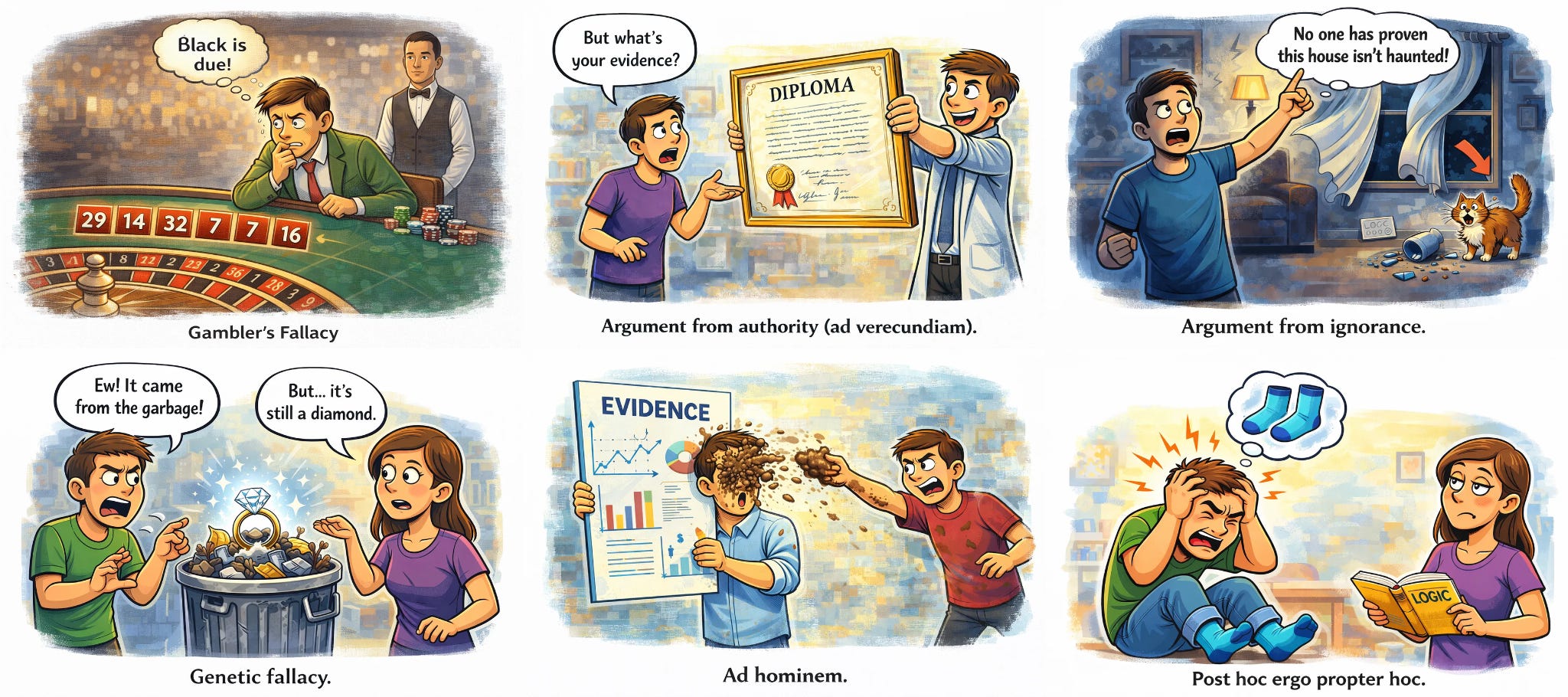
Post hoc reasoning
In hindsight, my section on post hoc reasoning could have been stronger, as reader Emiel de Jonge noted. It may have sounded as though I was downplaying how central the confusion between correlation and causation is in many pseudosciences. For the record: I fully agree that much of alternative medicine draws its intuitive appeal from this simple sequence: (1) someone is ill, (2) they undergo a treatment, and (3) their condition improves. That pattern is ubiquitous, and it is likely the primary psychological source of countless quack remedies.
As the biologist Peter Medawar once wrote, with only slight exaggeration:
If a person (a) is poorly, (b) receives treatment intended to make him better, and (c) gets better, then no power of reasoning known to medical science can convince him that it may not have been the treatment that restored his health.

Still, post hoc reasoning is not a formal logical error. It is better understood through the lens of signal detection: some temporal sequences do indicate a causal link; others do not. Any fallible observer can make two kinds of mistakes—failing to detect a genuine causal connection (a false negative), or inferring a causal link where none exists (a false positive). Because causal knowledge is crucial to survival, evolution has likely biased us toward false positives, so that we do not overlook real causes.
In fact, much of our causal knowledge begins with noticing that one event reliably follows another: crops grow better when fertilized with manure; smoking meat preserves it; burning vegetation can enrich soil; sexual intercourse leads to pregnancy. Even in medicine, some remedies were discovered simply by observing correlations, long before their mechanisms were understood. Famously, the bark of the Cinchona tree was used against malaria centuries before anyone identified quinine as the active compound. Other examples include willow bark as a painkiller and even moldy bread to treat wounds—a primitive antibiotic.

The difficulty is that many temporal sequences are mere coincidences, and without an appreciation of statistical subtleties such as regression to the mean, it is easy to fool oneself. In the case of disease—where there are only a handful of effective natural remedies to be discovered—the vast majority of pre-modern medicine was ineffective at best and often actively harmful.
Even today, in the age of double-blind trials and sophisticated statistics, we still rely on temporal succession as evidence. People suffering from complex conditions such as major depression often cycle through different antidepressants and settle on what “works for them”: they start taking a pill, wait a few weeks, and see whether they feel better, while trying to rule out obvious alternative explanations. Are they committing a post hoc fallacy? Not necessarily—so long as their inference remains provisional and open to revision. Even psychiatrists don’t fully understand how antidepressants work, or for whom. They make informed judgments based on clinical studies and evolving evidence, not deductive certainty.
How about personal attacks?
Reader Nicolas Fricia suggests that personal attacks qualify as ad hominem “fallacies” only when a person’s character is strictly irrelevant to the issue at hand. He cites as an example Donald Trump’s response to Mark Carney’s recent speech in Davos, where the Canadian prime minister criticized the United States (and other Western powers) for acting with impunity and disregard for international law. Rather than directly engaging with Carney’s arguments, Trump launched into one of his characteristic tirades:
Canada gets a lot of freebies from us, by the way. They should be grateful but they’re not. I watched your prime minister yesterday. He wasn’t so grateful. But they should be grateful to us, Canada. Canada lives because of the United States. Remember that, Mark, the next time you make your statements.
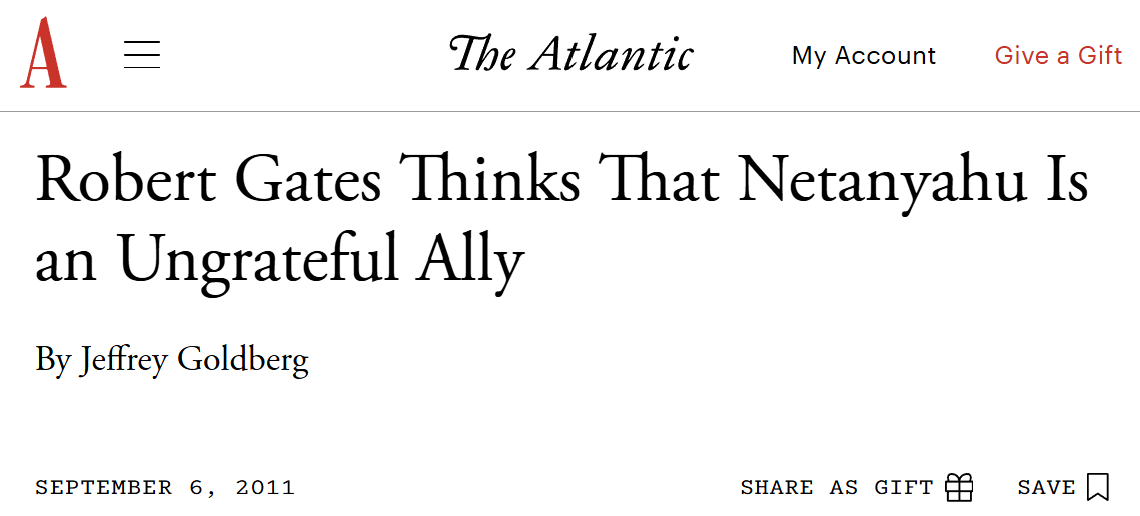
You need not persuade me that Trump is hardly a model of careful argumentation. Still, there is nothing inherently wrong about responding to criticism from a political ally by accusing that ally of ingratitude or hypocrisy. When Benjamin Netanyahu addressed the U.S. Congress in 2011 to criticize Barack Obama’s foreign policy, Obama’s secretary of defense, Robert M. Gates, reportedly described Netanyahu as an “ungrateful ally.” Was that a fallacy? Many liberal commentators did not think so.
Power relations and alliances matter in diplomacy: it’s not just about what you say, but also who you are when you say it. If an Iranian diplomat addresses the UN to lecture Western governments about human rights, it is not unreasonable to respond by pointing out the execrable human-rights record of the speaker’s own government. Sure, that’s a personal attack rather than a refutation of the argument’s substance—but charges of hypocrisy can be relevant in assessing credibility, motives, and good faith. What ultimately differs is our judgment about context.

Another important consideration for both ad hominem and ad verecundiam (appeals to authority) is time. Suppose you learn that the author of a study on drug X was funded by the pharmaceutical company that manufactures X. How much weight should that carry?
If you’re a pharmacologist participating in an academic seminar, you have both the time and intellectual obligation to scrutinize the methodology, re-run the statistics, inspect the data, and assess whether funding influenced the study design. If you’re in a public debate, however, or just deciding whether to switch medications, you don’t have that luxury. You rely, unavoidably, on credibility cues.
In time-constrained settings with lower evidential standards, information about incentives and conflicts of interest becomes more relevant. Such background factors serve as good proxies for trustworthiness. Even the most diligent scientist cannot independently verify every result they cite. Often, they defer to the reputation of the laboratory, the journal, or the research team that produced the finding. That deference is not a fallacy; it is a practical necessity in a world of limited time and cognitive resources.
Why is the prosecutor’s fallacy different?
Rather than inventing toy examples, as is common in courses on fallacies, let’s use a real case of the prosecutor’s fallacy. In the Netherlands, the pediatric nurse Lucia de Berk was convicted of multiple counts of murder after an unusually high number of patients died during her shifts. A statistician testified that the probability of so many deaths coinciding with her shifts by chance was 1 in 342 million. This astronomical figure was then treated as if it represented the probability that the nurse was innocent given the evidence. But that is a straightforward inversion of conditional probabilities:
P (Innocent | Evidence) ≠ P (Evidence | Innocent)
The probability of observing the evidence if someone is innocent is not the same as the probability that the person is innocent given the evidence. Confusing the two is not a contextual misjudgment or a pragmatic shortcut; it is a formal probabilistic error.
To make matters worse, it later emerged that the data had been cherry-picked—excluding deaths that occurred when the nurse was not present and including incidents in which she could not possibly have been involved. The statistical case collapsed, and the conviction was eventually overturned.

This is why the prosecutor’s fallacy survives my critique. Unlike post hoc reasoning or ad hominem arguments—which often depend on context, relevance, and pragmatic constraints—the prosecutor’s fallacy involves a clean mathematical mistake. It is wrong regardless of who commits it or under what circumstances.
I would be curious to hear whether readers can think of other examples of similarly cut-and-dried logical errors that emerge unscathed from my Fallacy Fork.
Natural = good
How could I have forgotten our old friend, the naturalistic fallacy! Many people have a strong intuition that whatever is natural is therefore good, wholesome, or beneficial. That intuition underlies a wide range of modern anxieties—from opposition to genetically modified crops and nuclear energy to moral condemnation of homosexuality.

Still, I do not think the equation natural = good amounts to a formal fallacy. Sure, it often misfires in modern environments, but the underlying intuition did not arise at random. It evolved because, in ancestral environments, it was frequently adaptive. If you live as a hunter-gatherer, you generally want to consume foods your body is equipped to metabolize and not stray too far from the ecological conditions in which your ancestors lived. “Natural” often tracked “safe” or “fit for our kind.”
Consider a mundane example that still holds today: “You shouldn’t feed your cat vegetables—it’s not natural.” That claim is perfectly reasonable. The domestic cat (Felis catus) is an obligate carnivore. Its digestive system is not designed to digest most plant matter efficiently, and it requires nutrients—such as taurine—found primarily in animal tissue. If you insist on feeding your cat a purely vegetarian diet in order to avoid committing the naturalistic fallacy, you will soon have a dead cat. And in this case, the sequence of events is genuinely causal.

Do fallacies still have a place in education?
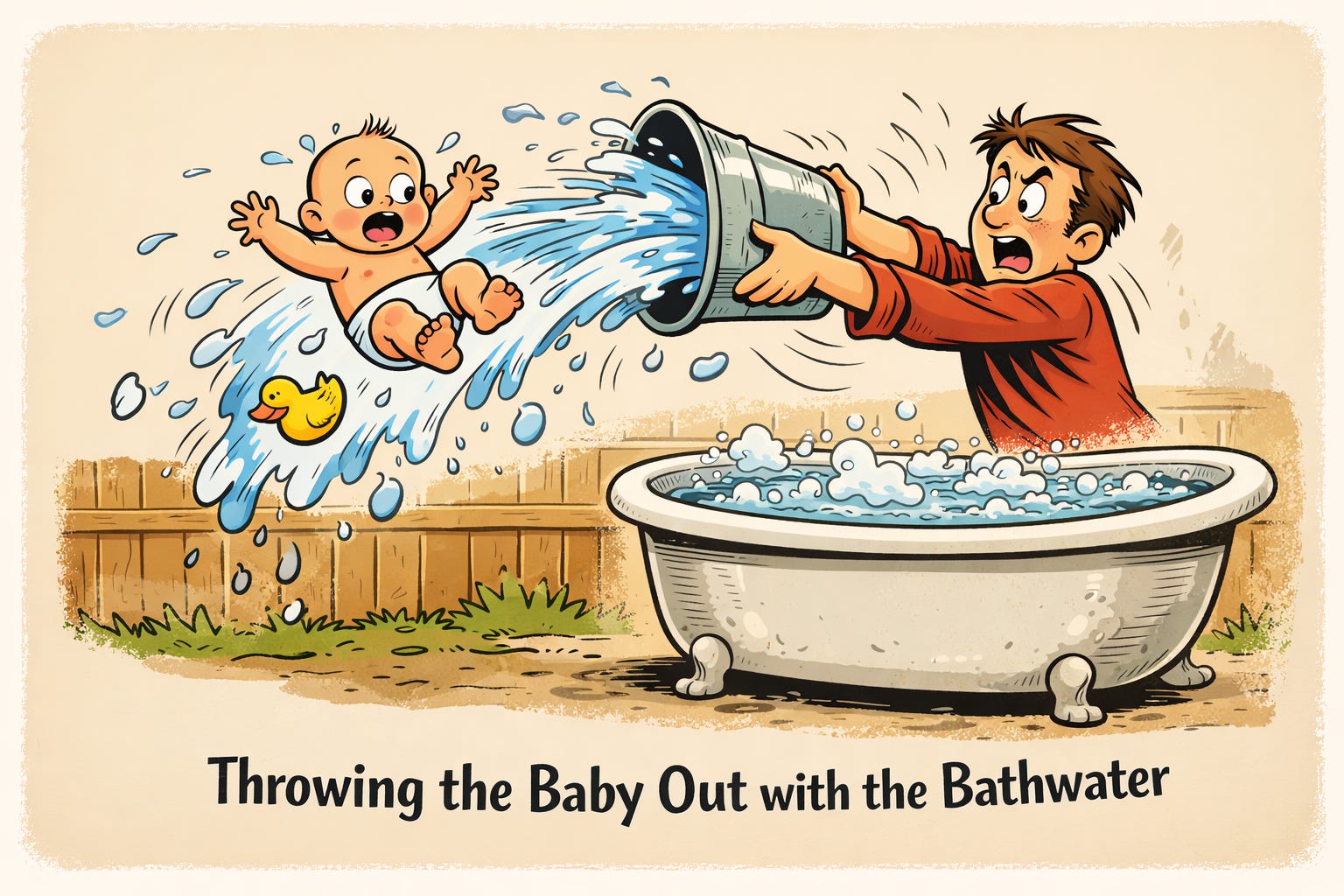
I’m somewhat conflicted over this, as several readers warned against throwing the baby out with the bathwater. At an introductory level, you always have to simplify and cut some corners, as you cannot burden students with endless qualifications and exceptions. As I see it now, there may still be a place for using the familiar labels—but I would drop the label “fallacy” and stop treating them as a rogues’ gallery of logical sins. Instead, we should describe them as recurring argumentative moves whose strength lies on a spectrum, from perfectly reasonable to decidedly weak.
The problem is not that ad hominem, post hoc, slippery slope, and the like fail to pick out useful patterns and moves. On the contrary, they track genuine features of human reasoning. The problem lies in the narrow focus on abstract argument structure and the moralized framing: “Here are the fallacies. Don’t commit them. Spot them in others.” That approach trains students to police arguments rather than to understand them.
If I were designing a course in critical thinking, I would rebrand the traditional fallacies as “tricky arguments”: moves that can be legitimate and even indispensable, yet also misleading in certain contexts. The classroom discussion would then shift to more fruitful questions: When is this move reasonable? When is it weak? What additional information would strengthen or undermine it?
Students should come away with the insight that no argument type is inherently bad. Argumentative strength is always a matter of degree—ranging from ironclad to fragile—and assessing it requires attention to context and evidence.
In any case, thank you for the many thoughtful comments!
Read more:

That was a good response to the feed back. You used it to refine your underlying argument, and reduce the potential ways it could be honestly misconstrued. While I'm sure there will be plenty of people who will read this and remain wedded to the doctrine of logical fallacies, it should be mostly because of an attachment to them rather than a problem with your arguments. And that's all you can ask. You aren't their therapist, after all!
Thank you, great article!
Your last point about place the fallacy list might play in education makes me smile, because it appears your opinion somewhat mellowed in the last 10 years while mine somewhat hardened! I was mostly saying this when I read you original papers (and blogs) back then, but now, I think it's not such a great idea. The "tags" are either simplifying what we do not want to simplify ("this is a fallacy, so no need to analyze further") or not really simplifying anything useful (because all arguments must be analyzed individually).
I think a better way to introduce critical thinking in a 101 course would be to "reconstruct" arguments, maybe using something like argument mapping (or something else), then work on analyzing them to eveluate their strenght. This way, you don't incentivize the students to become "referees" calling faults using a list of fallacy (or another kind of list), but you train them in the actual job of thinking about arguments. It's not going to be a magic bullet, of course, but it's at least doing something worthwhile.