
Human Nature, Hash, and a Philosophical Smackdown
The Night Chomsky Met Foucault

“Your tendency, my friend, to inquire after the objective, the so-called truth, to question as worthless the subjective, pure experience: that is truly petty bourgeois, you ought to overcome it. As you see me, so I exist to you. Is it worth while asking whether I really am? Is not ‘really’ what works, is not truth experience and feeling? What uplifts you, what increases your feeling of power and might and domination, damn it, that is the truth” – The Devil in Doctor Faustus (Thomas Mann)
‘Enlightenment: Sinister, destructive period of history which had a ‘project’ to dominate nature, prefer reason to superstition and stop people going to church. All a big mistake, but postmodernism will fix it.’ – The Dictionary of Fashionable Nonsense (Ophelia Benson & Jeremy Stangroom)
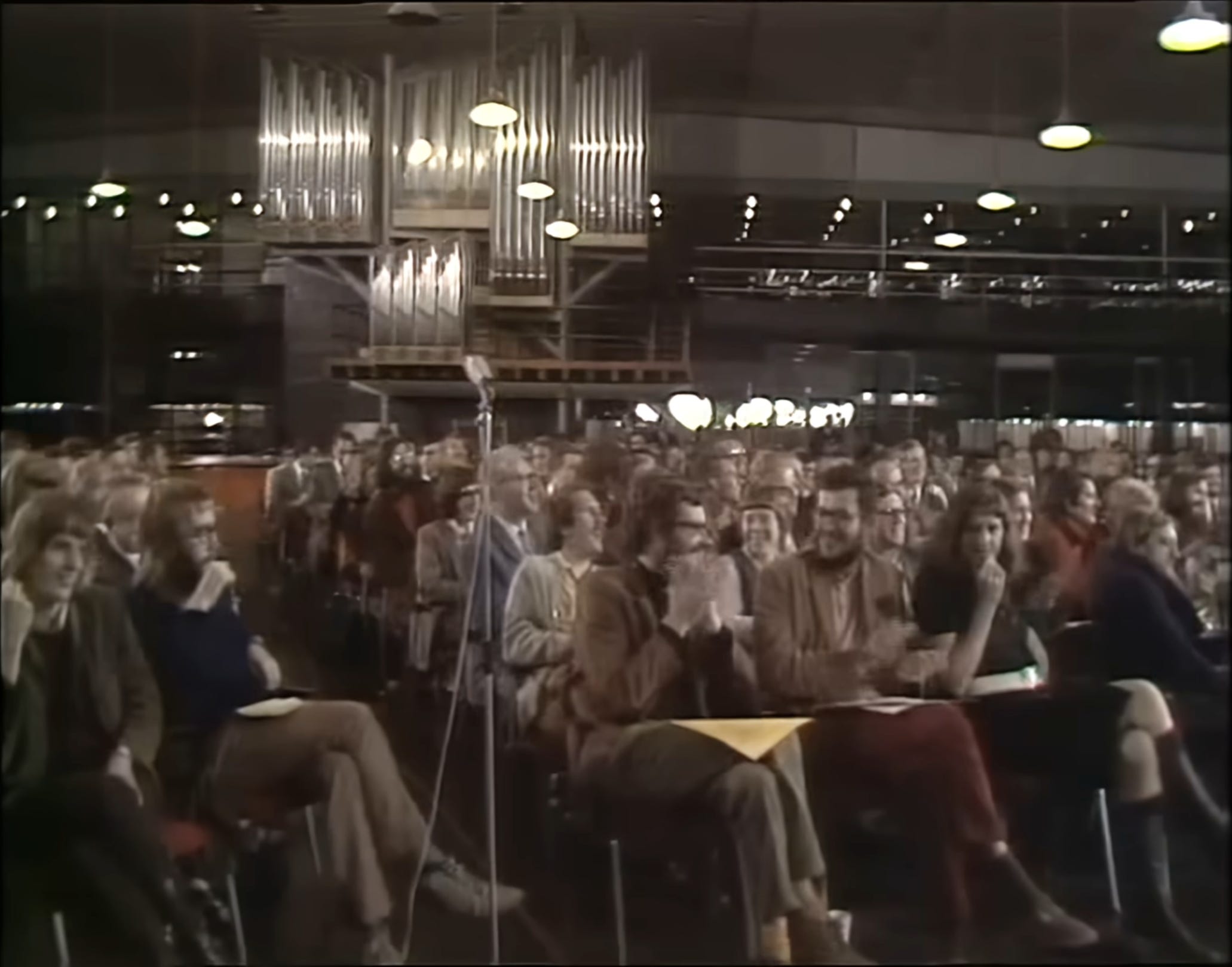
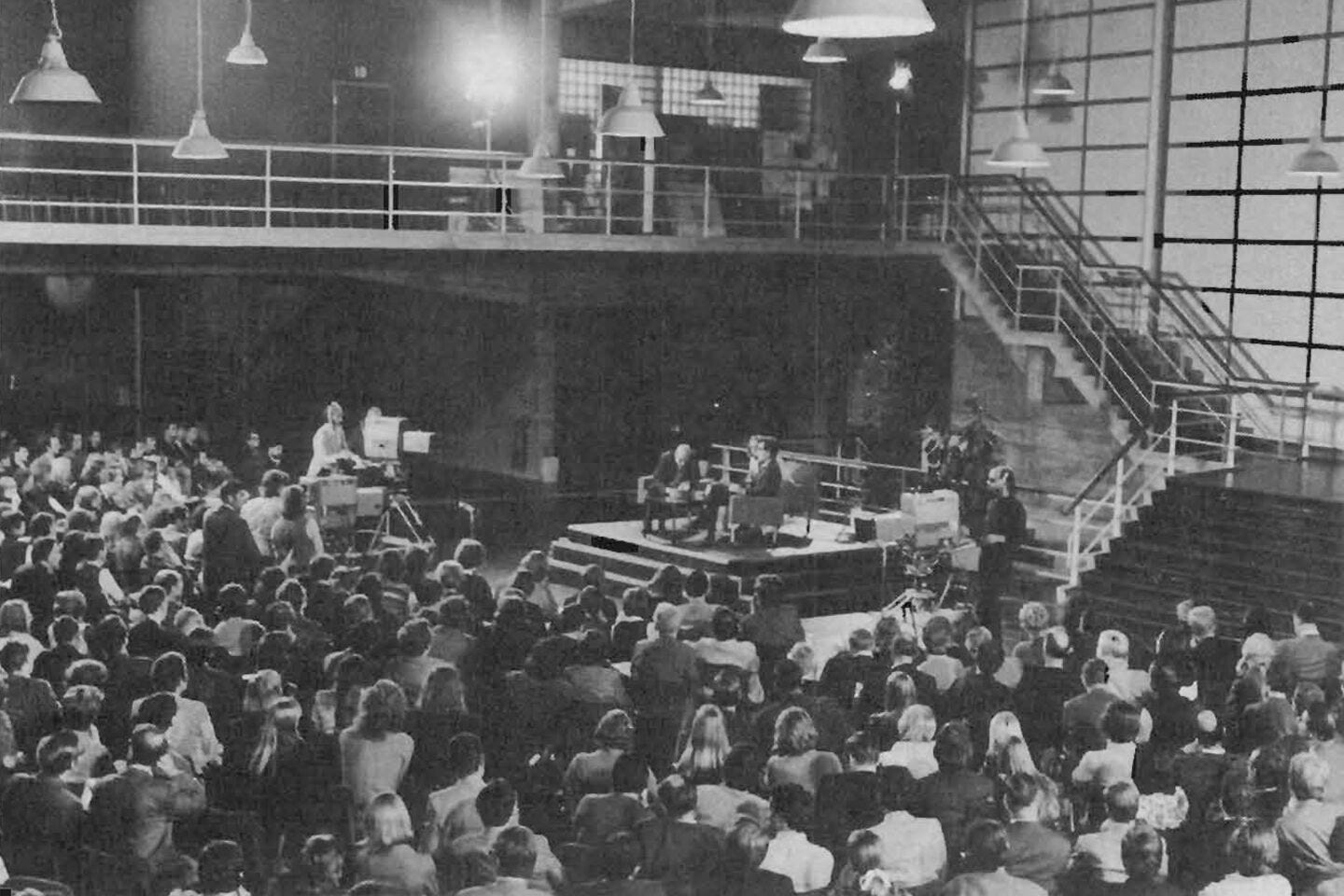
On an autumn evening more than half a century ago, in 1971, a television crew set up their equipment in the auditorium of the University of Technology in Eindhoven. The imposing Pels & Van Leeuwen organ, purchased by the Dutch electronics giant Philips, towers over the hall in the background. There are dense rows of folding chairs, with students and academics waiting impatiently for the main event. At a glance, you can see which era we’ve landed in: oversized glasses, unkempt hair, luxuriant beards — the audience is predominantly male. You can smell the scent of revolution in the air, and that’s no accident. The United States is mired in a deeply unpopular war in Vietnam, bringing tens of thousands of young protesters into the streets, on European campuses as much as in America. Here in Eindhoven, radical students and faculty are gathered for what will prove to be a singular confrontation between two titans of the progressive vanguard.
Moments later, they sweep down the stairs and take their seats in two modernist armchairs on a small podium. Their names are Michel Foucault and Noam Chomsky. One is a French philosopher from the Collège de France in Paris, flamboyant and openly homosexual, who rose to fame with a series of books on the intertwining of power and knowledge. The other is a Jewish-American linguist at MIT in Cambridge, a pioneer of generative grammar and a relentless critic of American imperialism.
Even half a century ago, Foucault and Chomsky were already regarded as leading progressive thinkers; since then, their reputations have only grown. Although Foucault’s career was cut short by his death from AIDS in 1984, he remains to this day the most-cited author in the social sciences. Noam Chomsky, meanwhile, has arguably been the most influential left-wing thinker in the world for decades — not least because his French rival was no longer around.
The official topic that night was an age-old philosophical chestnut: “Is there such a thing as ‘innate’ human nature independent of our experiences and external influences?” The moderator was Fons Elders, a young Dutch philosopher and Marxist whose long hair and full beard were perfectly in tune with the prevailing fashions. Chomsky was the only one on stage sporting a tie; Foucault was clad in his signature turtleneck under a stylish jacket, his bald head gleaming under the spotlights.
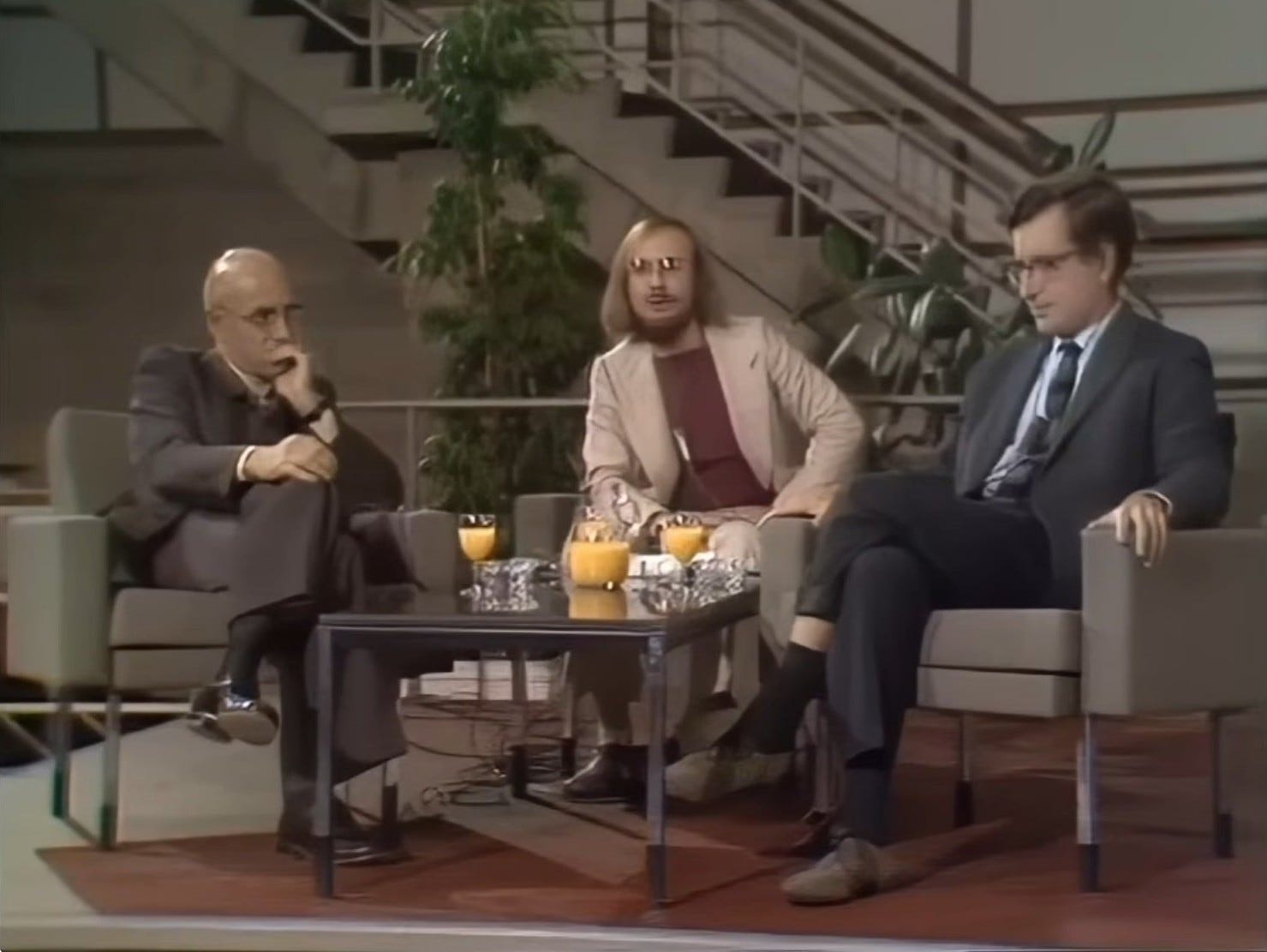
It was the very first time the two heavyweights entered the ring, and they would never do so again. Getting them to this point, the moderator later recalled, had cost him no small effort. During the preliminary meetings, Foucault in particular was cagey and full of mischief. Little did the strait-laced Chomsky know that, as part of the French philosopher’s fee, Fons Elders had procured a hefty portion of hash from the streets of Amsterdam. Months later, Foucault and his friends were still sniggering about the “Chomsky hash” they had smuggled into Paris. If Foucault relished anything, it was trampling bourgeois morality and seeking out “transgressive experiences.”
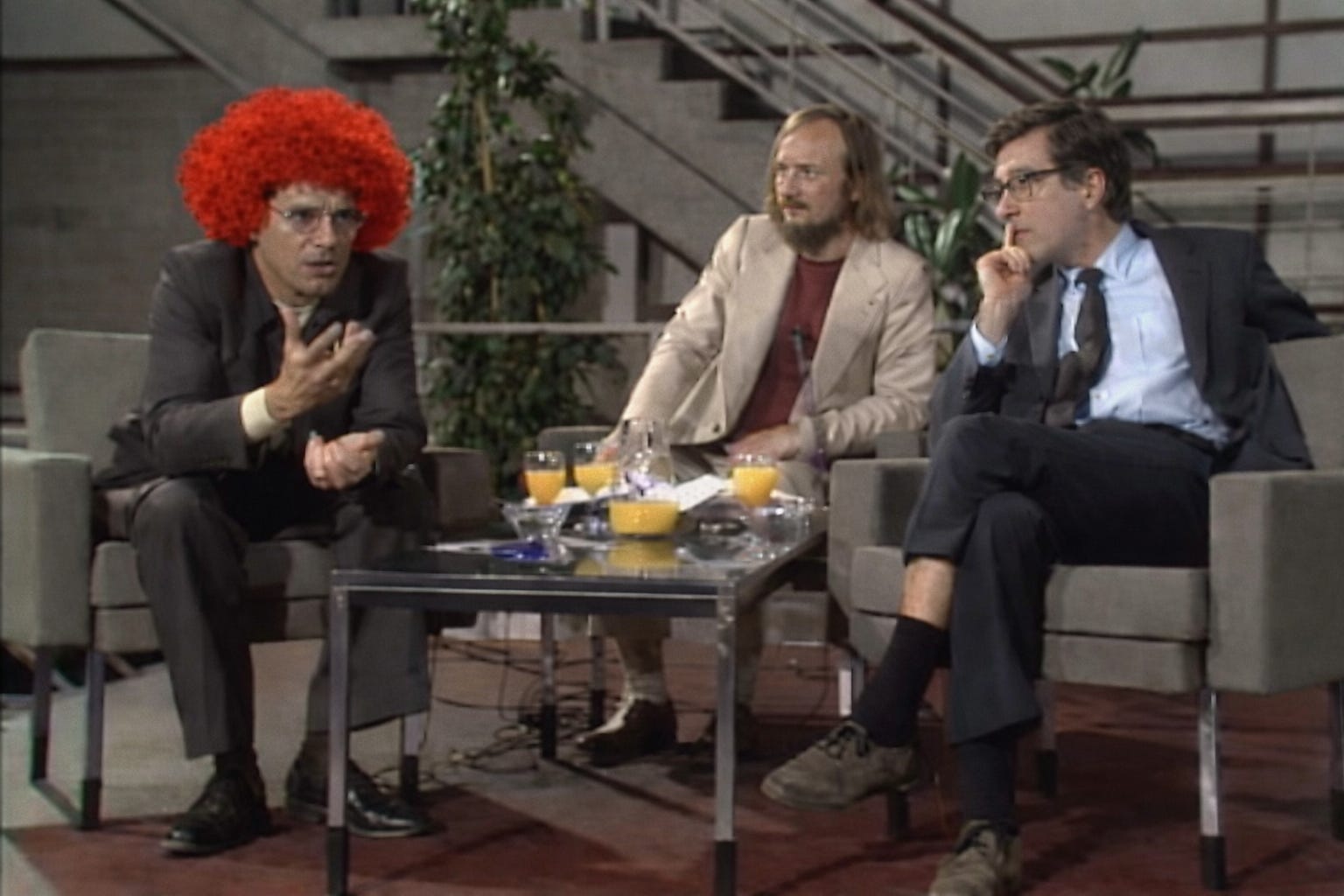
In fact, to gauge how transgressive Foucault could be, the moderator had challenged him to don a large red wig during the debate, as a way of puncturing the deadpan Protestant solemnity of the audience. The accessory was strategically within arm’s reach under the table, but although Elders repeatedly prodded the great French intellectual, whispering “Go for it!,” Foucault demurred and kept his dignity.
A yawning divide
When I discuss this legendary debate in my philosophy lectures at Ghent University, my students are always struck by the sheer width of the gulf separating the two titans. Despite their courteous efforts to find common ground, they seem to start from radically incommensurable premises. The moderator ventures a metaphor to bridge the gap: both thinkers are digging a tunnel from opposite sides of a mountain, and somewhere in the middle they will meet and embrace. It’s a suggestive image, but it feels more as though Foucault and Chomsky inhabit different continents. True, both are firmly on the Left — but that’s like saying penguins and polar bears both live in cold climates, yet remain separated by thousands of kilometres. Even at the level of language, they talk past one another. Shortly after the debate begins, Foucault apologizes for his poor English and promptly switches to French, reneging on his agreement with the moderator; from then on, each proceeds in his own language.
What is this gulf that separates them? Noam Chomsky rose to prominence in the late 1950s with his groundbreaking critique of behaviorism. This school of psychology, founded by John Watson and developed by B. F. Skinner, holds that human behavior can be explained entirely in terms of learning through conditioning. At birth, the mind is little more than an undifferentiated lump of clay, gradually molded over the course of our lives. Rubbish, said Chomsky. As a linguist, he argued that the mind of a newborn is already equipped with a battery of innate capacities. How else could a child acquire a spoken language so effortlessly, on the basis of such remarkably sparse input? These innate structures — not only for language acquisition, but for other domains of social life as well — are shared across all of humanity.
That view of human nature carried over into a political project. If we want to create a society conducive to human flourishing, we must take into account the innate psychological makeup of our species. Chomsky himself championed anarcho-syndicalism, a form of social organization in which people spontaneously form unions to seize control of the means of production. Above all, he is an Enlightenment thinker who believes in rationality and progress. Though he has often leveled harsh criticism at U.S. imperialism and other sins of Western civilization, he readily acknowledges that industrial modernity has brought about unprecedented material and social advances. If we are to improve the world, we must build on these achievements and draw on our best scientific knowledge.
Foucault’s perspective could hardly be more different, as quickly becomes apparent in Eindhoven. The French maître-penseur harbors a deep suspicion of Chomsky’s notion of a universal human nature, quoting the Chinese revolutionary leader with approval: “Mao Zedong spoke of bourgeois human nature and proletarian human nature, and for him, they were not the same” (this was 1971, with the bloody Cultural Revolution still raging). For Foucault, concepts like “truth” and “knowledge” are inextricably bound up with prevailing structures of power. From which vantage point, he asks pointedly, does a professor at the renowned MIT speak when he invokes a universal human nature? What power structures lurk behind such a claim?
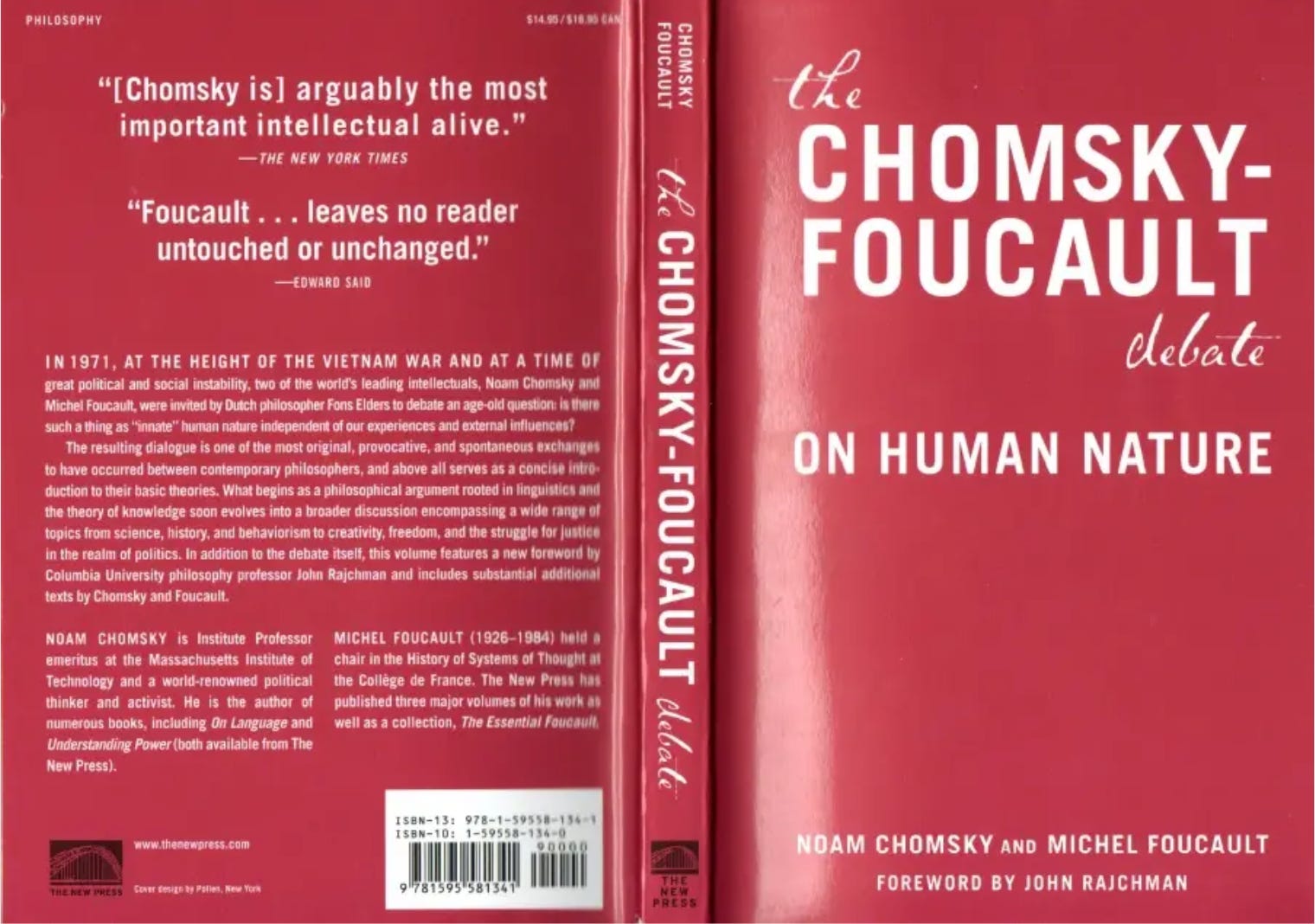
Foucault also dismisses Chomsky’s faith in moral progress as naïve. What is hailed as progress, he argues, often amounts to subtler and more insidious forms of oppression. He sets about puncturing Chomsky’s vision of an ideal society: even if we succeeded in reorganizing society in accordance with this supposed human nature, new forms of oppression would simply emerge, in a different guise and with different victims. Chomsky doesn’t buy that — but he concedes that, if Foucault were right, he could no longer support the anarchist revolution. By the same token, any decent person should now distance themselves from the communist revolutions in Russia and Cambodia under the Khmer Rouge, which produced little beyond bloodshed and misery.
Then Foucault delivers a retort that visibly startles the linguist. Why, my dear Chomsky, should that come as a shock? Surely it is no reason to abandon the revolution. For the first time in history, the proletariat has an opportunity to seize the reins of power after centuries of oppression under feudal and capitalist systems. It is only to be expected that they might resort to “violent, dictatorial, and even bloody power.” High-minded ideals like justice and equality, Foucault explains, are typically a cover for power: “I can’t see what objection one could make to this,” he replies, genuinely puzzled. For Foucault, moral principles are not objective, but exist only within specific configurations of power — a view that seems to preclude the very idea of moral progress.
Chomsky would later reflect that Foucault was the “most amoral person” he had ever met — not immoral, but amoral: someone deeply skeptical of any standards of right and wrong.
Unruly Children
The chasm that opened up that evening in Eindhoven was more than a quarrel between two intellectuals. It marked a fault line running through the modern world. Let’s give names to the two continents on which Chomsky and Foucault reside — the intellectual Arctic and Antarctic: modernity and postmodernism. A modernist believes in the Enlightenment project of continual human betterment through scientific knowledge and free debate. A postmodernist, by contrast, is deeply suspicious of these very ideas.
Postmodernism is not a formal school with a manifesto or a fixed set of doctrines, but a loose constellation of left-wing thinkers who rose to prominence in the second half of the twentieth century, chiefly in France and the United States. Foucault himself never embraced the label, nor did most others who have been saddled with it. Their backgrounds varied widely, but each, in his own way, sought to undermine the foundations of the Enlightenment project. And yet they did so by wielding its very own arsenal. Whatever one makes of them, they were unmistakably children of the Enlightenment — albeit unruly and rebellious ones who turned against their parents.
To understand how this came about, we must travel back half a millennium.
The passage above is the intro to the chapter on postmodernism in my upcoming book, currently titled The Betrayal of Enlightenment.
And yes—I can finally say it: I’ve signed a contract! The book will be published by Pitchstone Publishing, who also put out the excellent Cynical Theories by Helen Pluckrose and James Lindsay (which many of you will know).
This will be my first trade book written in English, which makes it both exciting and slightly terrifying. My Dutch readers will know that I’ve published several trade books in Dutch already, and this one will be loosely based on my latest, Het verraad aan de verlichting.
I’ve co-edited two academic volumes in English with my friend Massimo Pigliucci, but this is my first proper trade book in the language. My academic work has always been in English, but for years I wrote articles and op-eds in Dutch first and then translated them. I’ve since flipped that around: now I write directly in English, publishing in outlets like Quillette, Human Progress, The Conversation, and others.
The Anglosphere is a tough market for non-fiction, and I’m away from academia for the time being, so I feel very lucky to have received support from Emergent Ventures (George Mason University) to finish this project. As you can see here, I’m part of their 53rd cohort, alongside 15 others. Huge thanks to Tyler Cowen and the Emergent Ventures team for their generosity—it means I won’t starve over the next couple of months (if you’re still unsure about that, you can become a paid subscriber or buy me a coffee).
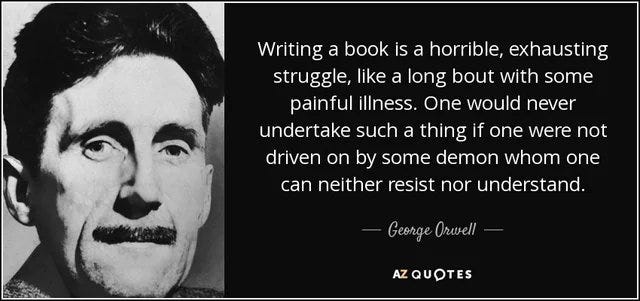
I’m really excited about this book! And despite the Orwell quote above, I’m actually starting to enjoy the writing process.
As always, comments and feedback are very welcome—the excerpt above is still a draft and very much open to revision.
Great Essay, as usual! It is very strange to me that Chomsky is much better known for mediocre political writing than for his breathtaking achievements in behavioral and cognitive science and his philosophy thereof. Always nice to read what todays top scholars have to say about the best of his work. Looking forward to your book!
Maarten, ik wist niets van deze ontmoeting tussen Foucault en Chomsky. Super boeiend! Ik begrijp dat je meer daarover verteld in je boek. Ik zal het aanschaffen en lezen, waarschijnlijk in het Nederlands.
Ik wens je heel veel succes. Je bent een van de weinigen die zijn gezonde verstand behouden heeft. Als ook een moreel Kompass.